Tuesday, March 31, 2009

Edutopia


The first video podcast that I watched was called the Edible Schoolyard. This was really neat to see that there is a school that is able to create this type of learning program for students. For a lot of students, the outdoors are not some place that they go. They only know that food comes from the store, and this program gives them a sense of where food actually comes from. This interested me so much that I decided to see if there were more programs like this in other areas. I found three others. One is at San Francisco Boys & Girls Club, Willie Mays Clubhouse, Hunters Point, you can view the website here. Another one is in Greensboro, North Carolina at the Greensboro Children's Museum, and you can explore that website by going here. the last one I found was really close to home. It is in New Orleans at Samuel J Green Charter School,located in the Orleans Parish. The website is located here. This one is a bit different from the school in Berkeley. It has an Open Garden the second Saturday every month where the entire community is welcome to help cultivate and harvest the garden. This establishes a sense of community, and after Katrina the city really needs this. Following another link on the website, I found another website dedicated to the garden, and you can see it here.


The next video I watched was about the Global Village. It was very interesting. Children were separated into groups ad given different "countries" to live in for the night. Each group had somethings, but no one group had everything. One group were refugees in a refugee camp and they had nothing, not even the same language. Each group had to learn to cooperate with each other and the other groups to get everything they needed. This taught them to work together and also gave them a sense of what is was like to live in a different culture without all the things they were used to having. At the end of the video there were some brief interviews with some of the students. One girl said she now understands why she needs to take action in her community. There is a part of the Heifer International website for educators that tells you how you can help and educate your students about world hunger. It may not be possible for every school to stay over night in one of the Global Village sites, but this website can help them learn things about the way others live and what others sometimes have to go without. There are lesson plans, classroom activities, and a resource library. It is worth checking out, and if you are interesting in helping further, you can go to the website Heifer International to get involved. You can also follow them on Twitter.

iTunes University

Apple iTunes U is a service to everyone, not just students, that has lessons in languages, lectures, podcasts, and audio books that can be downloaded for free. These things come from various places such as universities, PBS, museums, and cultural institutions around the world. This content could be used in any classroom, from early elementary up through college. As teachers this can also be used for ourselves because we should never stop learning and enhancing the content we teach our students. An overview of this program can be found here. There are also two reviews of the research paper "iTunes University and the classroom: Can pod casts replace Professors?" that can be found here, and here.

As a student I find this part of iTunes fascinating. Just looking at the first page that comes up I see many things I want to check into. The Research Channel looks really neat and the Michael C Carlos Museum at Emory has an exhibit on King Tut! These are things that I am interested in just for myself. The research Channel has two on top, Orphans Preferred: The Pony Express and Perspectives on U.S. History. Both of these would be interesting on a personal basis, but would also be good for the classroom as a teacher.

According to a couple of different articles I read, students who listened to podcasts and took notes scored higher then the students who went to class. Does this mean an end to professors? I do not believe that it does, but using iTunes U in addition to class would be beneficial to most students. The value to older students is priceless. In this article I read, click here, a 62 year old truck driver is going back to school without having to sit in class with kids. This will help many older, non-traditional students who want to continue to learn, but don't want to go to class with a bunch of kids the ages of their own kids and grand kids, many of whom place little importance on the classes they are taking.

Using iPods in the classroom


Upon hearing about iPods in the classroom, my first thought was that it was not a good idea. However, after reading some of the things that have been written about it my mind is beginning to change. Duke University in Durham, NC began an initiative in the year 2004. Incoming freshman enrolled in specific classes were loaned an iPod to use in their classes. Tracy Futhey, VP for information technology and chief information officer at Duke, said, "Until this project, iPods were mostly considered to be an entertainment device, but no one had explored their untapped potential for education. The idea behind this project was to put an incredibly easy to use, highly mobile and versatile device into the hands of our creative faculty and students to find out what kinds of academic uses they would discover." I think that the iPods do have a wide range of ways to be used in the classroom, but should be used with supervision in the younger students. According to one student at Duke, not many freshmen were using the iPods as intended. This student felt that it made Duke look "rich and silly" for loaning out the iPods to students who did not use them properly for educational purposes.

For elementary and secondary classrooms, the ideas would be the same. Teachers could create content on their iPod and then sync with the iPods that the students are using. They students could also download content from iTunes and other approved sites to enhance their learning. One site I found was Podcasts for Teaching and Learning, click here. There is a list of sites that would be helpful for content on an iPod. I did come across a blog entry that warned about copyright infringement. A teacher can not just record herself reading a book and then distribute the recording to her students via iPod. This is against the law, although from reading the blog, more teachers than not do this. There are many books that you can find on iTunes and other sites to download and distribute for free. You could try these sites, Storynory, click here, an about.com page,click here, and LibriVox, click here. There are many more out there, you just have to look.

I think that iPods in the classroom are a great idea in theory, however to be practical we have to realize that not every child can afford an iPod, nor can every school afford to give or loan iPods to every child. So, while this program is great in theory, it will be a long time if ever that it is implemented for every school.

Friday, March 20, 2009

Dr. Alice Christie and Geocaching in the Classroom

I found this part of Dr. Christie's site very interesting. I had never thought about using a GPS system in a classroom, but after exploring this part of the site I can see it now. At first I wondered if it would be applicable in a 1st or 2nd grade classroom. As I continued to explore, I realized that if a teacher wanted to use this type of technology, she could make it work with any age. The only difference is the amount of time spent on instruction and teacher involvement. By teacher involvement I mean that with the younger ones, the teacher might have to be part of the group that is looking for the geocaches instead of letting them do it alone as you might an older group. If there is an interest in this technology, I believe it is possible with any age group.

It could also be used as a collaborative teaching project with another class. It would not have to be a class of the same grade, it could be any other class that the teacher is willing to learn new technology with you. If you have younger students and pair with an older class, it gives the younger ones an opportunity to learn from the older ones and gives the older ones the opportunity to teach and help the younger ones understand the project. These type of collaborative projects benefit everyone involved.

As interested as I was in this part of Dr. Christie's site, I was very disappointed that the curriculum examples for elementary classes were unavailable on the site. I hope this is a temporary thing because I am very interested in seeing what she has to offer the younger grades.

Another part of the site that I want to mention is the photography part. Her pictures are wonderful. I enjoyed the different perspectives in her self-portrait (Found Here). There are many ways of looking at and seeing yourself and she shows us many facets of herself. However, my favorite picture is found in "A Colorful Morning st Flagstaff Farmers' Market". It is a picture of toes...baby toes. I happen to love baby feet and so it is my favorite. It is the third picture from the end. You can see it here.

Thursday, February 26, 2009

Is Wikipedia trustworthy?


First let me explain what Wikipedia is. It is billed as an online encyclopedia that anyone can edit. The three articles found here, here, and here say much the same thing. They all say that Wikipedia is not a good source for completely true information. Wikipedia is able to be changed by any person or company. There are cases spoken about in the articles where Wal-mart, Diebold, Dow Chemical Plant, and politicians have changed entries about themselves to make the entries look better. This makes it very difficult to trust content from Wikipedia.

Doing searches on Google, Wikipedia is usually the first site that comes up. This is really a bad thing because most students will look at the first site first when doing research. If the content on the page is not reliable, the student will learn something that is not true or might only be partially true. I believe it is very important to remind students not to use Wikipedia as a source for research. If a teacher is going to permit the use of Wikipedia, it should be one of many sources instead of the only one.

I do not believe that Wikipedia should be considered a trusted source of information. It could be used as a starting place to find names or ideas about a topic that is then researched further, but should not be used as the only source of information. It is too easy for me to go into the post about Gone With The Wind, a book by Margaret Mitchell, and change the type of book, the heroine's name and any of the other character names. If a person had never read this book and came across the changes I had made, she might think that the heroine was Melanie and that Scarlett had married one of the Tarleton twins. I would not trust Wikipedia for this reason, it is simply too easy to change things to suit yourself. If you worked for a chemical company that contributed to Hitler's Germany, you could go to Wikipedia and change facts to make it look like that had never happened. It would not change history, but some researcher might believe your version of history instead of what is true.

Wednesday, February 25, 2009

Randy Pausch: Last Lecture


The first thing I picked up was two quotes. They were "We can not change the cards we are dealt, just how we play the hand." and "The inspiration and the permission to dream is huge." These quotes caught me, and I wanted to make sure to share them here. The first one is so true. The things that happen to us are something that we might not be able to change or control, but we can control how we react to things. If something happens and we decide that we have failed and are never going to be able to get ahead, we probably won't. If something happens and we decide that this is only a small setback, we will use it as a stepping stone to get ahead. The second quote got me because being able to dream is vital to making things happen for you. If you can't dream, how do you know what you want to achieve? Going along with this quote was his comment of having specific dreams. It is important to be able to dream about being an elementary teacher, instead of just dreaming of teaching children. You need to know where your dream is leading you in order to get there.

I found his reference to brick walls to be very interesting and true. In my life I have had brick walls crop up in my path, but finding a way around them has been so important. He said that the walls are there to make you find out how bad you want whatever it is. If you want something bad enough, you will find out how to get around that wall. For me, this can be seen in my life today. I want to teach. In order to teach, I need a degree. To get a degree I had to go to school. The brick wall in my life on my path to my degree is my family. It is not easy to go to school, be a wife, and be a mother, but it is not impossible.

I also found that this lecture just held my attention. He made me really listen and I took so many things from this lecture. A few of the other things I got from this are as follows: fundamentals - without them nothing is going to work, a very bad place to be is where you screw up and nobody bothers to let you know it, wait and people will surprise you, think about the way you say things because there is a bad way and a good way to same the same thing, the way people perceive you is important, focus on others, and apologize when you mess up. Another quote I will take with me is "experience is what you get when you don't get what you expect". He also spoke on perspective. His story was about him complaining to his mother about a class he was taking. His mother just leaned over and reminded him that when his father was his age, he was fighting the Germans. This is perspective, and it makes you think.

The most emotional part of his lecture came in three parts for me. The first was his comment about Moses. He said that like Moses he would only see the Promise Land, not set foot in it, but that was OK because at least he would get to see it. He was talking about the legacy he was leaving in all the students he had taught and all the programs he had started and built. The second was when he brought out a cake for his wife's birthday. I admit to getting teary thinking about what she might have been thinking. This was part of his thinking of others and not yourself. In the midst of a lecture, cancer, and chemo he was still thinking of ways to make his wife smile. The last moment was when he asked if we had figured out that this lecture wasn't for us after all. It was really for his three children. I cried.

I know that we were supposed to blog on the teaching methods he advocated and used at MIT, but that is not really what I got out of listening to his lecture, so I could only blog on what I got out of it. The main thing was just keep trying, and never give up.

Monday, February 16, 2009

The Best Of the Fischbowl


I chose to read the blog posted in November titled "Why Wireless". I found it very interesting, but a little scary at the same time. Scary because, as a parent, it is my job to keep my children safe. I know Fisch mentions that we should "have high expectations for our students, to educate them to behave ethically, responsibly and safely and then expect that they will do the right thing." However, to be realistic we must admit that children are curious and sometimes curiosity can result in dangerous things. I did not notice anything in the article that mentions any sort of parameters for where the students would be allowed to go or not go. There was nothing said in the post or in the comments about any kind of software, such as netnanny, to prevent students from viewing sites that are inappropriate. Assuming that students will act mature and police themselves is just asking for trouble, and as a teacher responsible for these students could we afford to make this assumption?

In a positive note, I think wireless with the right parameters could be a good thing. It would be helpful to students who might want to use lunch time to work on a research paper or project. It would be helpful to teachers who have to "float" from class to class to have access to the Internet during their planning period when they might have to hang out in the cafeteria. So much good could come out of this idea, IF the right safeguards were there.

Podcasts : Things I have Learned From Others

The first podcast I listened to was by Erica Sledge, Ashley Cleveland, and Shyane Fant. The title of this podcast is "Useful Web Sites For Elementary Teachers". One of the things I noticed right off is the amount of "ums" that were used. I know it is hard not to use this, but it really does not sound like you are prepared for your subject. I will try not to use any "filler" words and instead just pause to gather my thoughts. Another thing I noticed was that there really was no interaction between the three people talking. They each talked about the website that they found. I only noticed a few questions that were asked, mostly about the last website given. I think there needs to be some more interaction between the people involved. Even if you have a few questions written down, it makes the podcast flow better and seem more of an interview rather than just three people giving a report on three websites.

The second podcast that I listened to was by Theola Hines and Larrica Smith. The title of this podcast is "Facebook as an Educational Tool?" This podcast happened to be the first podcast from the Tuesday class. This one was more like a conversation between two people where one person knows the topic and the other asks questions about the topic. This is a better way, in my opinion, to do a podcast than the first one I listened to because it seems to have more information given about the topic. I did notice that Dr Strange interjected some comments into the conversation in the middle. Since it did seem as if the conversation was lagging, he may have thought it needed help to keep the conversation going.

Wednesday, February 11, 2009

Is it OK for teachers to be technologically illiterate?

In this edition of The Fischbowl, Click Here, Karl Fisch takes the stand that all teachers should be technologically adept. He says that people should not be proud to say they do not understand computers, that instead they should be ashamed. The students we teach today are the future and we should be able to educate them in a manner that will benefit them in their future. He also mentions that some of the staff at his school seem to be complacent in their ignorance and not really willing to learn anything new which worries him.

This topic is an important one. It is evident that new things are happening in technology everyday and as teachers we should be up to date on things that our students need to know in order to realize their full potential. If we as teachers do not know something, we should be willing to do all we can to find out. I agree with Fisch when he says "In order to teach it, we have to do it." We can model for our students how to blog, how to email, how to video conference, etc. These are things that they need to know and we have to know in order to teach them. So what if we make a mistake? Do we think as teachers we have to be perfect, that we can't make a mistake or our students will laugh at us? It is absolutely ludicrous to let our fear of of what our students might think hold us back from learning new things, and teaching them. We expect our children, if we have any, to learn from our mistakes and not be doomed to repeat them. Why not expect our students to do the same?

Monday, February 9, 2009

Podcasts


Listening to the different Podcasts was very interesting. There are a couple of different ways that these Podcasts began. Some began with music, one with a very strange sound, and a few with people talking. Just listening to the intros made it apparent that you can begin your own podcast with any of these things or a combination of things.As I listened to the Podcasts, I noticed other differences. Some were done with only one person talking about a certain subject or subjects, others were a mix of men and women, some were all in one place while others had guests or speakers from other locations.

The topics were varied. I listened to one podcast that was all about the Apple Mac. This wasn't as interesting to me as I do not have a Mac. What I did find interesting was that during this particular Podcast, the speakers did mention the health of Steve Jobs, Apple's founder. It served to make the Podcast a little more personal for me. I enjoyed the beginning of the KidCast Podcast. The guy speaking, Dan, was telling us that he was sitting in front of his Christmas tree and about his vacation in Mexico. For me, it makes him more of a real person, not just a voice coming from my PC. One of the ones I wasn't the most impressed with was one where it seemed as if the two people talking were just talking on the phone. It seemed less professional to me. I know that Podcasts are not really professional, but I think they took informal too far with all the stories and jokes they told.

Having a website in connection with a Podcast is a good idea. I noticed that at the beginning of some of the Podcasts, a website was given. For people who are more visual, this might help them to focus more on what is being said. The one time I can think of that I would be able to concentrate on a Podcast without a website to help, being a visual learner myself, is in the car. This would be an excellent way to keep up on topics that interest you and help manage time wisely. Another Podcast had what sounded like might be a live chat that went with the podcast. I think this is a great idea. It would allow the listeners to ask questions in real time, much like a call in radio show. I think that this would also enable me to concentrate on the topic with few distractions.

I think that when you create a Podcast that involves people from other places, you have to be sure that the sound quality is good. I listened to one Podcast where the female sounded like she was in a tunnel. This was one thing that made it hard for me to listen to that podcast. The sound was very distracting for me. I think it is a really neat thing to be able to come together from different areas of the country or even different countries, but I believe it is important to the listeners that the sound be such that is doesn't cause distractions.

Friday, January 30, 2009

International School Blogs


The first site I found is the Green School in Bali, Indonesia. Click Here It seems like a wonderful school to attend. There are classroom blogs from each year, year 1-2, year 3-4, etc. It does not use grades as we know them, first grade, second grade, etc. This school goes through year 8. The blogs seem to be informational for the parents to keep up with what is going on at school. According to one place on the blog, the blog is an "online forum that highlights some of the magical things that take place on our campus daily". This type of blog is a great resource for parents and for students. The parents can keep up with what is happening, and the students can look back over the year and see what they have learned. It could also help students remember things that happened last week or last month.

The next international blog I found Click Here was created by Amanda DeCardy. She works as a technology integrationist at Shanghai American School, Pudong Campus. This blog is interesting because she describes the way she uses technology in the classroom and what her students are learning from it. This blog is helpful to parents and other teachers because she does describe what she is doing in the classroom. She posts pictures and some video. As a parent, I would love seeing this. She has even created a school youtube channel, which she says is good because "Kids love to see themselves on YouTube, parents love to share the videos of their kids with family, potential students can view the videos to see what life is like at the school, and
potential teachers can view the videos to see what life is like at the school." Sounds like a good idea to me!

Classroom Blogs in the United States


This blog is about blogging in the classroom. The first blog I found is the blog of Mr. Chamberlain. This is his classroom. You can find it here,Click Here . In this blog he allows the students to be part of the blog by using videos of the students doing and discussing subjects. He puts pictures of the class and things they do. It seems like a great resource with which to keep parents informed and to encourage the students to use the technology available to them. It also teaches them in a hands-on manner that I feel is important to learning.

The other blog that I found was done by a teacher on her vacation to Greece. She created this blog, Click Here, to allow her students a look at Greece. She had pictures and history about the places she visited. This kind of blog would be helpful to students in learning history. It gives them a sense of what and where their history lesson is coming from. You could also combine this type of blog with a reading or writing lesson. This type of blog would work well in a homeschool setting. Different homeschool groups could combine on lessons without having to meet at a central location.
 title=source:Janice Friesen

Sunday, January 25, 2009

ACCESS

ACCESS (Alabama Connecting Classrooms, Educators, and Students Statewide) is another excellent resource for both teachers and students. It provides a means for students to receive instruction in subjects that are not available to them at their school. In the first tab, About Access, there are many documents that explain what Access is and how it is used. There are documents that provide information about the implementation of Access. There is also a list of people on the "Governor's Task Force on Distance Learning". The next tab, Courses, provides a course catalog of course descriptions, web based and video conferencing course offerings. For students it gives contact information and offers software for downloading. For Educators it offers an application to become a Distance Learning teacher. It also offers some other resources. For Parents there are two pdf. files. One is an informational brochure and the other is a list of course offerings.

There is a way to contact the administrator, Ms. Martha Davidson, and the coordinator, Ms Earlene Patton. It gives both phone number and email address.There is an additional Help tab that provides computer requirements, recommended requirements for labs, and a FAQ for further information. There is also a Resources tab that gives other files in pdf. or doc. format.

As a teacher, I think this would be a great resource for other teachers. This is geared toward the upper grades. As I will be teaching in the elementary school, I do not think I will use this. However, as a parent if my child had the opportunity to use this, I would be all for it. It is a great way to expose our children to things they might otherwise miss.

Did You Know?

The movie found at http://thefischbowl.blogspot.com/2007/06/did-you-know-20.html was very interesting. It really made you think. I know that other countries have much better language instruction than the US does, but I did not realize that the prediction for the number one English speaking country in the world would be China. Does this tell us something about our society? The fact that every college graduate in India speaks English, and could be inferred to also speak their own Indian dialect, says something about the education system that we can not claim here. The facts about the jobs for today's students did surprise me a little. I guess loyalty to a company is not taught like it used to be. One article that I read on this subject suggested that today's young workforce is looking for what the company can do for them and not what they can do for the company. According to the video, this is true.

I have never really thought about where I would be or where technology would take my children five, ten, or even twenty years from now. Just today in church the sermon was on change and the fact that some people do not like change. Change is necessary for the good of all. The fact that we are seeing new college majors and new additions to the English language should be seen as a good thing. It means we are moving forward. The technology of the future and the children we teach to use it will benefit everyone in all countries around the world.

Sunday, January 18, 2009

ALEX

ALEX is an acronym for Alabama Learning Exchange. It is a website that provides a resource for teachers to share ideas. In the first tab, Courses of Study, you will find tabs that take you to different subjects. Clicking on these will then allow you to choose a grade level or specific topics within the subject and then provide some lesson plan ideas. The next tab is Web Links. Clicking on this will allow you to choose who you are, teacher/admin/student, and provides web links accordingly. The Lesson Plan tab will allow you, with an account, to create lesson plans or search for other lesson plans. A professional Development tab gives a list of websites to help you find classes and workshops to further your professional development. The Distance Learning tab will give access to ACCESS(Alabama Connecting Classrooms, Educators, and Students Statewide), which is a state initiative to allow access to AP, electives, and other classes that some students might not have available at their own schools. Available with an account is the Personal Workspace. This allows you to create and save lesson plans. There are also Help and Search tabs available if you have problems.

This seems to be an excellent resource. I know I will use this, especially in the first years of teaching. It is always a good thing to have available a resource that can help the students in your room. If this means using another teacher's lesson plans because the subject matter is covered better or in a way that the current students will learn the subject matter better, I will do it. To have available a resource in such an immediate way is an advantage that we have that older teachers did not have access to when they began teaching. I hope to benefit from the experienced teachers and the lesson plans they have created and shared on this site.

As a parent I will use this as well. One of my girls has a harder time with math skills. By having access to lesson plans written by teachers, I will be able to help her more. In addition to this, I can use other lesson plans to give more on a lesson one of the girls really enjoyed. Not only will this benefit my girls, but it will give me extra practice teaching different the subjects.

Tuesday, January 13, 2009

All About Mary

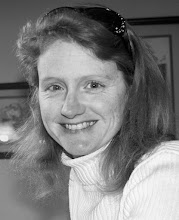
To begin with my name is Mary Kathryn Davis. I am married to a wonderful man, Michael. We have 3 beautiful daughters, Kathleen, Kortney, and Sydney. No we will not be trying for a boy, we are quite satisfied with our girls. I am the oldest of 6. My siblings are in order as follows, Andrea (30), Matthew (28), Palmer (21), Sam (19), and Sarah (16). I have 2 sets of parents, my mom and (step)daddy and my dad and stepmother. I am very close to my mom and my grandmother. I am unable to see my family as often as I would like because they all live in Tennessee.

I was born in Chattanooga, Tennessee. It is a beautiful place to live. The mountains are beautiful, especially in the fall when the leaves change. I went to school in a tiny little town just north of Chattanooga called Ooltewah. In trying to pronounce it just leave out the "L" and try it Oo-te-wah. In HS we thought we were lucky to have a Hardees and a Waffle House in addition to our gas station.

We came to Mobile in 2000. My husband is a computer programmer for Evonik, and his job brought us here. He goes to the University of Mobile and will be finished with his Master's degree in 2010. This fall our oldest daughter will start school at the University of South Alabama. She will be in the first marching band that USA puts on the field. We are very excited about that. To be honest, I am more excited about the band than I am about the football team!

I do not travel much, though I would love to do more. I have been to Mexico 3 times on Youth Mission trips. I went to Marl, Recklinhausen, and Koln, Germany during Christmas of 2007. If you have never seen the Koln Dom in Koln, Germany you should. It is a very impressive medieval cathedral. As big as it is, it is just a miracle that it wasn't destroyed during WWII when most of the surrounding city was. If I was able to go anywhere in the world I wanted, I would want to go to Ireland and Scotland (being Scots-Irish) and Egypt. I have a love for Egyptian history and would love to see the places that I have read about.

I am very proud that my youngest brother, Sam, is serving our country in the US Marines. He will be shipping to Afganistan later this year. Being a marine is all he has ever wanted to do, and though it is hard for our family, I am glad that he is able to fulfill his dream. Remember that even if you do not agree with this war and our presence in the middle east, we should all support those men and women who are risking and losing their lives to provide us the freedom to agree or disagree with it.

I am sure that I have more to add, but that will have to wait until my class presentation!

First day of class

This is the first day of EDM 310. We are learning how to blog. As I have never created a blog, this should be interesting. Some of my friends have blogs and I enjoy reading them, but with 3 children to raise it is hard to find the time to do something like this.

A little about me. I have 3 daughters. Kathleen is 17 and a senior in high school. Kortney is 11 and in 6th grade. Sydney is the baby at 6 and is in 1st grade. My husband is in school as well getting his master's degree. We are a very busy family. I am working on my elementary education degree. I hope to teach 1st grade.